
Skip to content

Free Shipping On All USA Orders $50+

Hours: M-F 9am - 6pm or Sat 9am - 5pm

Phone: 720-580-9558

FLY FISHING REELS

Reels

From lightweight trout reels and classic click-and-pawl designs to sealed-drag saltwater reels built for tarpon and Giant Trevally, the right fly reel keeps your setup balanced and gives you control when a fish finally decides to use the backing you paid for! Shop fly fishing reels from Cheeky, Galvan, Hardy, Lamson, and Ross, with options for freshwater, Euro nymphing, steelhead, salmon, bass, saltwater, and everything from 2-weight trout rods through 12-weight big-game setups.

Filters

Original price $425.00 - Original price $495.00
Original price
$425.00 - $495.00
$425.00 - $495.00
Current price $425.00

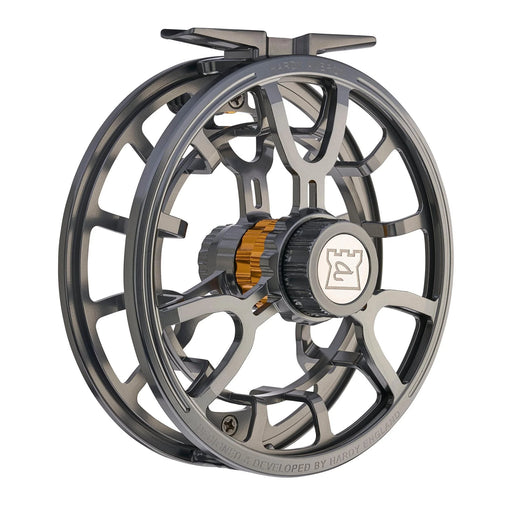
Hardy Averon Fly Reel

Hardy
In stock

The core of the Hardy performance reel range, Averon delivers the quality and reliability that are the hallmarks of the Hardy brand. Its lightwe...

View full details
Original price $425.00 - Original price $495.00
Original price
$425.00 - $495.00
$425.00 - $495.00
Current price $425.00
Original price $350.00 - Original price $350.00
Original price
$350.00
$350.00 - $350.00
Current price $350.00

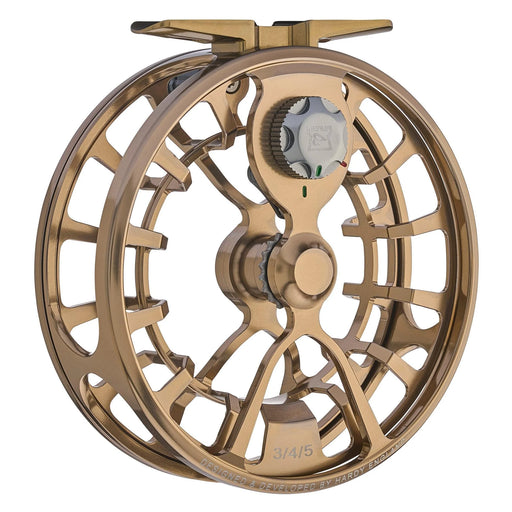
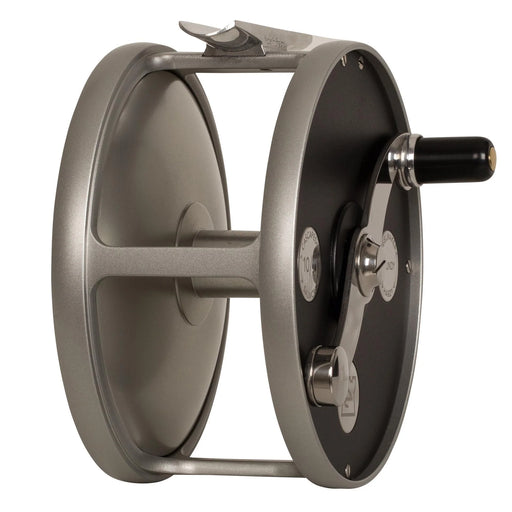
Hardy Resonate Fly Reel

Hardy
In stock

Renowned world wide for our classic click check reels, the Resonate utilizes Hardy's years of experience and on going innovation to produce t...

View full details
Original price $350.00 - Original price $350.00
Original price
$350.00
$350.00 - $350.00
Current price $350.00
Original price $450.00 - Original price $450.00
Original price
$450.00
$450.00 - $450.00
Current price $450.00

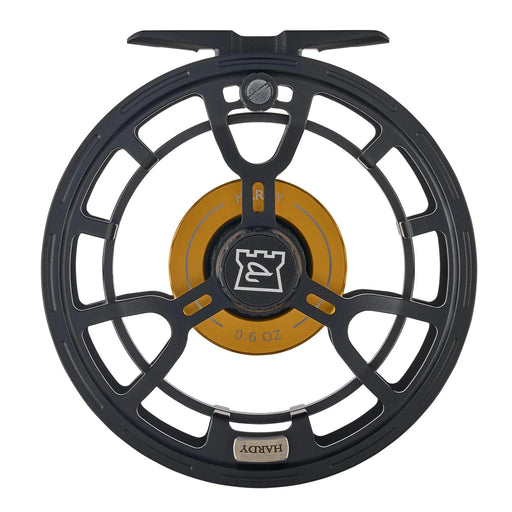
Hardy Averon Euro Fly Reel

Hardy
In stock

Designed to meet the exacting standards of todays Euro Nymphing and technical light line river anglers the Averon 5000 EN has been designed w...

View full details
Original price $450.00 - Original price $450.00
Original price
$450.00
$450.00 - $450.00
Current price $450.00
Original price $725.00 - Original price $925.00
Original price
$725.00 - $925.00
$725.00 - $925.00
Current price $725.00

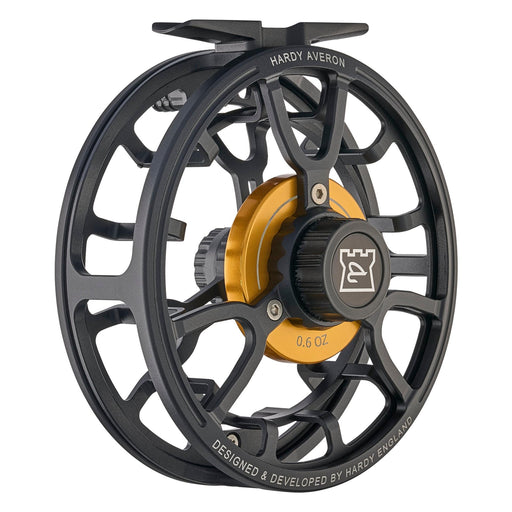
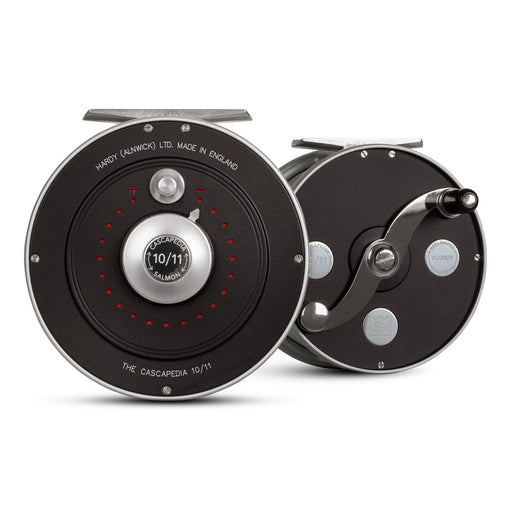
Hardy Cascapedia Fly Reel

Hardy
In stock

Available in a full 4-size range covering every fresh water application from trout to two handed Spey, the new Cascapedia reel is a stunni...

View full details
Original price $725.00 - Original price $925.00
Original price
$725.00 - $925.00
$725.00 - $925.00
Current price $725.00
Original price $625.00 - Original price $675.00
Original price
$625.00 - $675.00
$625.00 - $675.00
Current price $625.00

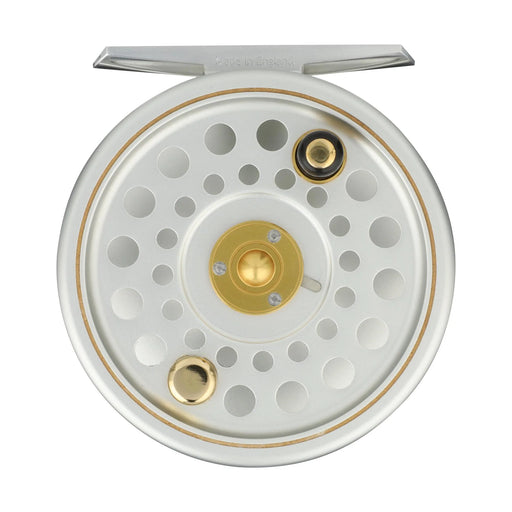
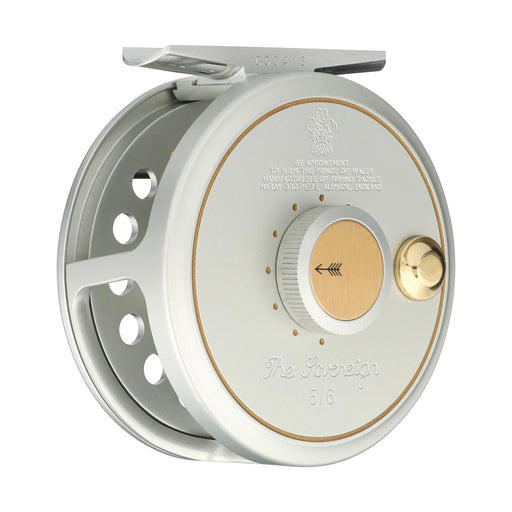
Hardy Soverign Fly Reel

Hardy
In stock

One of the favorites from Hardy's past, the Sovereign reels were conceived in 1987, remained in production until the late 1990's and of...

View full details
Original price $625.00 - Original price $675.00
Original price
$625.00 - $675.00
$625.00 - $675.00
Current price $625.00
Original price $249.99 - Original price $299.99
Original price
$249.99 - $299.99
$249.99 - $299.99
Current price $249.99

Lamson Liquid S 3-Pack Fly Fishing Reel & Spools

Lamson
Low stock

More Liquid courage. When creating the first-generation Liquid, we focused purely on the virtues and advantages a pressure-cast process can offer. ...

View full details
Original price $249.99 - Original price $299.99
Original price
$249.99 - $299.99
$249.99 - $299.99
Current price $249.99

Choosing a Fly Reel: More Than a Fancy Place to Store Line

For a surprising amount of trout fishing, your fly reel lives a fairly relaxed existence.

It holds your backing.

It holds your fly line.

It occasionally makes a pleasant clicking noise.

And if you're fishing a small creek, there is a decent chance the trout never even makes it onto the reel.

This has led generations of anglers to repeat the line:

“A fly reel is just a place to store line.”

Tell that to a steelhead headed downstream.

Or a bonefish burning across a flat.

Or a tarpon attempting to remove 150 yards of backing from your reel before lunch.

The truth is that the importance of your fly reel depends heavily on what you're fishing for, how you're fishing, and how large and powerful those fish are likely to be.

At Ascent Fly Fishing, we carry reels from Cheeky, Galvan, Hardy, Lamson, and Ross, covering everything from beautifully simple trout reels to highly engineered drag systems built to deal with fish that have absolutely no interest in coming quietly.

What Size Fly Reel Do I Need?

The easiest place to begin is by matching your reel to the weight of your fly rod and fly line.

Most reels are designed to cover a range of line weights rather than a single size. For example, one reel might be designed for 4- and 5-weight lines while another covers 7- and 8-weight setups.

As a general starting point:

  • 2–3 weight reels are ideal for small streams, brook trout, panfish, and other light-line fishing.
  • 4–5 weight reels cover the heart of traditional trout fishing and pair well with many of the most popular freshwater fly rods.
  • 5–6 weight reels work well for larger trout, stillwater fishing, streamers, and versatile freshwater setups.
  • 7–8 weight reels move into bass, carp, steelhead, salmon, northern pike, bonefish, redfish, and other larger freshwater and light saltwater applications.
  • 9–10 weight reels are appropriate for permit, snook, larger steelhead and salmon, juvenile tarpon, barracuda, and other powerful species.
  • 11–12 weight reels enter serious big-game territory for large tarpon, Giant Trevally (GT), sharks, and other fish capable of making your reel sound like an emergency siren.

The important thing is balance.

A reel that is dramatically too heavy can make a rod feel cumbersome, while a reel that is too light may make longer rods feel tip-heavy.

This becomes especially important with Euro nymphing rods, where longer rods often benefit from slightly heavier reels that help balance the outfit in your hand.

Does a Fly Reel Need a Good Drag?

Sometimes.

And sometimes it really, really does.

If you're fishing a 3-weight on a mountain creek, a sophisticated drag system probably isn't going to determine whether you land a 9-inch brook trout.

In fact, many anglers love traditional click-and-pawl reels precisely because of their simplicity, light weight, and classic feel.

But as fish get larger, faster, and stronger, the drag becomes increasingly important.

A good drag applies smooth, consistent resistance as a fish pulls line from the reel.

The word smooth matters.

A drag that starts with a sudden jerk can break light tippet. A drag that changes pressure unpredictably can turn the fish of the trip into the story about the fish of the trip.

For trout and most freshwater fishing, a quality disc drag provides more than enough stopping power.

For saltwater species such as bonefish, permit, tarpon, and GT, a powerful and well-protected drag becomes a much more important part of your system.

Click-and-Pawl vs. Disc Drag Fly Reels

Fly reel design generally falls into a few broad categories.

A click-and-pawl reel uses a mechanically simple system to create resistance as line leaves the spool.

They're lightweight.

They're traditional.

They make that wonderful mechanical scream when a fish runs.

And for trout fishing, they can be an absolute joy.

A disc-drag reel uses a more sophisticated drag system to create adjustable resistance. These reels are better suited for anglers who need greater stopping power or more precise drag control.

Neither design is automatically better.

If you're fishing delicate dry flies for trout, you may love the simplicity of a classic Hardy or Ross click-style reel.

If you're hunting fish capable of pulling you halfway across a lagoon, you'll probably appreciate something with considerably more braking power.

What Is a Large-Arbor Fly Reel?

A large-arbor fly reel has a spool with a relatively large diameter.

That may sound like a small design difference, but it offers several useful advantages.

First, a larger spool retrieves more line with every revolution of the handle.

If a fish suddenly changes direction and comes racing toward you, faster line pickup can help you maintain tension.

Second, a larger arbor reduces the amount of tight coiling—or memory—that develops in your fly line.

And third, large-arbor reels generally maintain more consistent drag pressure as line leaves the spool because the effective spool diameter changes less dramatically during a long run.

This is why large-arbor designs have become extremely popular for both freshwater and saltwater fly fishing.

How Much Backing Do I Need?

Backing serves two purposes.

First, it fills space on the reel so your fly line sits at the correct diameter.

Second, it gives you additional line when a fish runs farther than the length of your fly line.

For ordinary trout fishing, you may go years without seeing your backing outside of your living room.

That doesn't mean you don't want it there.

For larger freshwater species and saltwater fish, backing becomes considerably more important.

Bonefish, permit, tarpon, steelhead, salmon, and GT can all make runs that take an angler deep into the backing.

The exact amount you need depends on the reel, fly line, and species, but bigger game generally calls for more backing capacity and stronger backing.

If you're building a new setup, check out our selection of fly line backing and make sure the reel you choose provides enough capacity for the fish you plan to pursue.

Freshwater Fly Reels vs. Saltwater Fly Reels

Can you use the same fly reel everywhere?

Sometimes.

But saltwater is remarkably talented at destroying things.

A saltwater fly reel has to deal with corrosion, salt, sand, powerful fish, heavy backing loads, and demanding drag requirements.

Reels intended for saltwater often feature corrosion-resistant materials, protected or sealed drag systems, larger handles, greater backing capacity, and frame designs built for heavier use.

If you primarily fish trout, bass, or other freshwater species, browse our Freshwater Fly Reels.

If you're headed toward bonefish, permit, tarpon, redfish, GT, or other saltwater species, our Saltwater Fly Reels will narrow the field to reels designed for that tougher environment.

What About Euro Nymphing Reels?

Euro nymphing presents an interesting reel-selection problem.

The reel is rarely needed for a screaming 100-yard run.

Instead, balance and line management become especially important.

Euro rods are commonly 10 feet or longer, and an ultralight reel can make the entire setup feel tip-heavy.

That's why some Euro anglers intentionally choose a reel with a little more mass.

Ascent currently carries specialized options such as the Lamson Guru E Series, a reel specifically designed around balancing Euro nymphing setups.

Pair a Euro reel with an appropriate Euro nymphing rod, Euro line, Euro leader, and jighead nymphs, and the entire setup begins working as one system rather than a collection of unrelated parts.

How Important Is Reel Weight?

Very.

But lighter isn't always better.

Fly-fishing marketing has spent years teaching us that shaving fractions of an ounce from equipment is automatically an improvement.

Sometimes it is.

Sometimes you've just paid considerably more money to remove enough aluminum to equal half a potato chip.

What matters is how the reel balances the rod.

A lightweight reel can feel fantastic on a short 3-weight trout rod.

That same reel may feel awkward on a 10½-foot Euro nymphing rod.

Similarly, a larger saltwater reel should provide the capacity and drag performance you need without making the complete outfit unnecessarily heavy.

The reel, rod, and line need to be considered together.

Match Your Fly Reel to the Rest of the Setup

Once you've selected a reel, build around the fishing you intend to do.

For freshwater, pair your reel with one of our freshwater fly rods and choose an appropriate floating, sinking, streamer, Euro, bass, pike, steelhead, or salmon fly line.

For saltwater, match the reel with a saltwater fly rod, species-appropriate saltwater line, saltwater leaders and tippet, and enough backing to handle long-running fish.

If all of that sounds suspiciously complicated and you'd rather somebody else match the pieces for you, take a look at our fly rod and reel outfits.

There is no rule stating that you have to turn every equipment purchase into a research project.

Why Buy Your Fly Reel From Ascent Fly Fishing?

There are plenty of reels that will hold fly line.

The question is whether they are right for your rod, your fishing, and your fish.

At Ascent Fly Fishing, we'd rather ask a few questions before making a recommendation.

What rod are you putting it on?

What species are you fishing for?

Freshwater or saltwater?

Are you Euro nymphing?

How important is reel weight?

Do you want a classic click-and-pawl reel or a modern drag system?

Do you need serious backing capacity?

Those details matter far more than simply buying the reel with the largest price tag.

We carry reels from Cheeky, Galvan, Hardy, Lamson, and Ross because they provide options across a huge range of fishing styles, from small-stream trout to legitimate big-game saltwater fishing.

If you're trying to match a reel to a new rod or deciding between a few models, reach out to us.

We'll help you find a reel that makes sense before you spend the money.

Fly Fishing Reel FAQs

What size fly reel should I buy?

Match the reel to the weight of your fly rod and fly line. Most fly reels cover two or more adjacent line weights, such as 4/5 or 7/8 weight. Also consider balance, backing capacity, drag performance, and the species you plan to target.

Does the fly reel have to match the rod weight?

It should be appropriately sized for the rod and line. A 5-weight rod generally needs a reel designed around roughly a 4-, 5-, or 6-weight line rather than a reel designed for a 10-weight saltwater setup.

How much should I spend on a fly reel?

That depends heavily on the fishing. Trout anglers can fish very successfully with relatively simple reels, while saltwater and big-game anglers may benefit considerably from investing in premium drag systems, corrosion resistance, and greater durability.

Do I need an expensive fly reel for trout?

Not necessarily. For most trout fishing, reel balance, reliability, and line management matter more than massive drag power. Many excellent trout reels use simple drag systems or traditional click-and-pawl designs.

Is a sealed drag necessary?

For freshwater fishing, not always. For saltwater, a sealed or highly protected drag is much more desirable because it helps protect the reel's internal components from salt, sand, and debris.

What size reel should I use for a 5-weight fly rod?

Choose a reel rated to comfortably accommodate a 5-weight fly line and appropriate backing. Reels labeled around 4/5, 5/6, or similar ranges are commonly used, depending on the manufacturer's sizing system.

What size reel should I use for permit?

A 9-weight setup is a very common starting point for permit fishing, so choose a saltwater-capable reel matched to a 9-weight line with a dependable drag and plenty of backing capacity.

What size reel should I use for Giant Trevally?

GT fishing commonly calls for a 12-weight fly rod and reel setup, with a powerful drag, substantial backing capacity, and construction capable of handling heavy pressure and saltwater abuse.

Can I use a freshwater fly reel in saltwater?

Only if the manufacturer rates the reel for saltwater use. Even then, rinse it thoroughly with fresh water after fishing. For regular saltwater use, a purpose-built saltwater reel is generally the better choice.

What is the best fly reel brand?

There isn't a single best brand for every angler. Galvan, Hardy, Lamson, and Ross each offer different designs, drag systems, weights, aesthetics, and price points. The best reel is the one that fits your rod and the way you actually fish.

A fly reel may spend 99% of its life quietly holding line.

But every once in a while, everything changes.

The rod bends.

The line comes tight.

A fish turns downstream.

And suddenly that harmless-looking round piece of aluminum attached to your rod becomes the only mechanical connection between you and something that very much wants to be somewhere else.

That's when you find out whether you bought the right reel.

Tight Lines, Friend!

Guided Trips
{"statementLink":"","footerHtml":"","hideMobile":false,"hideTrigger":false,"disableBgProcess":false,"language":"en","position":"left","leadColor":"#146ff8","triggerColor":"#146ff8","triggerRadius":"50%","triggerPositionX":"right","triggerPositionY":"bottom","triggerIcon":"people","triggerSize":"medium","triggerOffsetX":20,"triggerOffsetY":20,"mobile":{"triggerSize":"small","triggerPositionX":"right","triggerPositionY":"bottom","triggerOffsetX":10,"triggerOffsetY":10,"triggerRadius":"50%"}}
